
What is the Russian squat routine?
The Russian squat routine is a Soviet-era squat cycle that has been copied between gyms, forums and training logs for decades. Six weeks long, three squat sessions a week, eighteen sessions in total, and one famous claim attached to it: finish the cycle and your max goes up roughly 5%.
There is no author to credit and no canonical edition. It survives as a table of sets, reps and percentages, which is exactly how most people still run it. The sheet below carries the standard cycle plus a "Masters" adaptation for older lifters.
Phase one: volume at 80%
The first twelve sessions barely move the bar weight at all. Everything sits at 80% of your max and only the amount of work changes. Sessions alternate: one day is a fixed six sets of two at 80%, and the alternating day climbs - six sets of three, then four, then five, then six, all at that same 80%.
The climb tops out around six sets of six at 80%, which is thirty-six reps at a weight most lifters treat as a working triple. It is comfortably the hardest stretch of the cycle, and it is where abandoned attempts die.
Holding the percentage still while the volume rises is the entire design. You are not chasing a heavier bar in phase one; you are making 80% feel like a warm-up.
Phase two: intensity to 105%
The last six sessions invert the pattern completely. Volume falls away while the percentage climbs - five sets of five at 85%, four sets of four at 90%, three sets of three at 95%, two sets of two at 100% - with the familiar six sets of two at 80% interleaved as the lighter day between them.
The cycle closes with a single at 105% of the max you entered six weeks earlier. That lift is the payoff and the whole source of the routine’s reputation: run properly, the volume banked in phase one makes a weight you could not previously lift feel available.
The Masters version
Three heavy squat sessions a week is not realistic for everyone, and the Masters version in the sheet is a lower-frequency adaptation aimed at older lifters. It keeps the same volume-then-intensity logic but spreads the work out, with fewer sessions per week and more room to recover between them.
It is worth a look even if you are nowhere near masters age. If you have run the standard version once and the third session each week was always the one that quietly got skipped, the Masters layout is a more honest starting point than a cycle you cannot actually complete.
Who it’s for
Advanced lifters, and stubborn intermediates, with sound squat technique, an off-season, and nothing else competing for recovery. This is specialisation in the strict sense: for six weeks the squat is the only lift that matters, and everything else is arranged around it.
Do not run it in meet prep, alongside any other squat volume, in a calorie deficit, or as a beginner. Do not run it if your squat falls apart under fatigue either - the phase-one sets of six are performed tired, and eighteen sessions of a technique fault is eighteen sessions of rehearsing it.
Strengths & trade-offs
Strengths: an unusually clear, fully prescribed structure with a defined payoff at the end, a volume-to-intensity arc that has been validated by thousands of lifters, and a commitment that is only six weeks long. Nothing builds squat-specific work capacity faster.
Trade-offs: the frequency is punishing, the routine contains nothing but squats, and the fixed percentages leave no mechanism for a bad week. The 5% figure is a typical outcome rather than a promise - enter an optimistic max or run it on top of a full training week and you will get less.
How to run it
Enter a max you have hit recently, in the same conditions you plan to train in - belt or no belt, sleeves or no sleeves, same depth. A 5 kg overstatement at the start turns into a missed set of six at 80% by week four, and there is no graceful way back from that mid-cycle.
Then clear the decks: cut leg accessories entirely, keep deadlifts light or drop them for the duration, eat and sleep like it is part of the program, and spread the three sessions as evenly across the week as your schedule allows. When you finish, take a genuinely easy week before starting anything else.
Open the spreadsheet below to see all eighteen sessions plus the Masters version, or copy it in Google Sheets and enter your max.
The spreadsheet
Browse the full program below, or open it in Google Sheets to make your own copy and plug in your numbers.
Spreadsheet via LiftVault. If the preview doesn’t load, use “Open in Google Sheets”.
Equipment
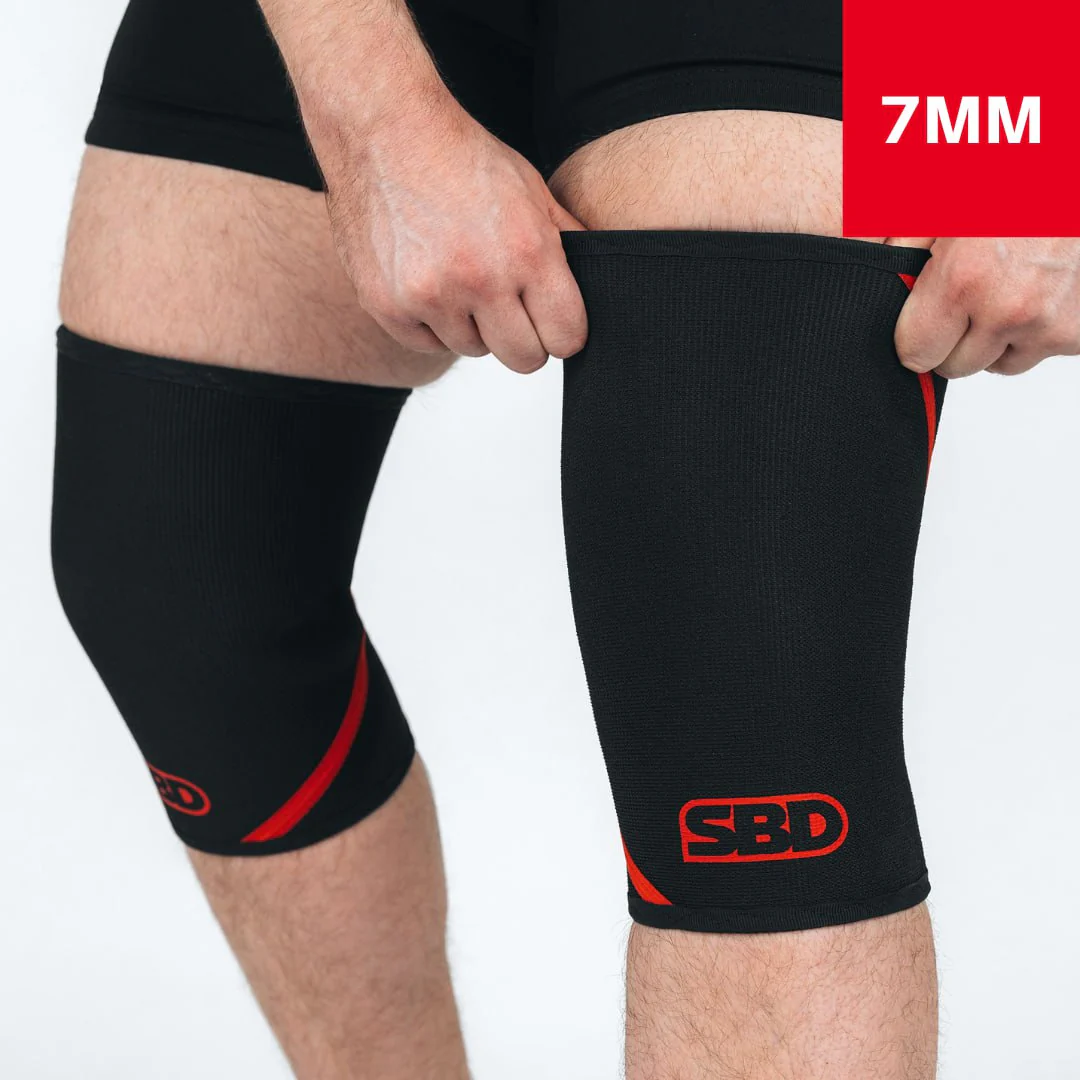
This is a barbell program - you don’t need much, but a few pieces make it run smoothly.

Learn the lifts
New to any of the movements in this program? Our lift guides break down technique, cues and the common mistakes to avoid.
 Iron Library