
What is Ivysaur 4-4-8?
Ivysaur 4-4-8 is a free novice program written on Reddit that grew into one of the more widely recommended alternatives to Starting Strength and GreySkull LP. It came out of a specific complaint: the classic novice routines build strong beginners, but beginners who are not especially muscular and whose upper backs lag badly behind their squats.
The fix is structural. Linear progression stays - you still add weight regularly and still train the whole body three times a week - but the set and rep scheme carries more total work, and pulling volume is treated as a priority rather than an afterthought.
How it works
The name describes the main-lift scheme: several working sets in the low rep range followed by a higher-rep back-off set of around eight. The heavier sets drive strength adaptation while you are fresh; the back-off set adds volume at a load that leaves something behind besides fatigue.
The week alternates two full-body sessions across three training days, with squats present throughout and the pressing and pulling lifts rotating. Progression is linear and lift-dependent - lower-body lifts climb faster than upper-body ones, which the spreadsheet handles for you.
How it compares to Starting Strength and GSLP
Starting Strength is a strength program that produces muscle as a by-product; Ivysaur 4-4-8 aims at both from the start. Compared to sets of five, the heavy-sets-plus-back-off structure delivers more total reps per session, and there is meaningfully more rowing, chin-up and upper-back work.
Against GreySkull LP the two are close cousins - both add volume to the novice model - but Ivysaur leans harder on the back-off set for hypertrophy where GSLP leans on an AMRAP final set. Either is a defensible choice; this one tends to produce a more balanced-looking beginner.
Who it’s for
This is for beginners in their first year of barbell training who want strength and visible muscle at once, and who can commit to three sessions a week. It is particularly good for lifters who already know their upper back and arms need the attention.
Returning lifters can run it as a quick re-entry cycle. Anyone who has already stalled repeatedly on a novice linear progression has outgrown it and should move to weekly progression instead.
Strengths & trade-offs
Strengths: it keeps the simplicity and fast progress of novice linear progression while fixing its two best-known weaknesses - thin upper backs and limited hypertrophy - and the spreadsheet handles the weight jumps for you.
Trade-offs: sessions run longer than a bare-bones novice routine, and like every linear progression it eventually runs out. The extra volume also means you need to eat and sleep like someone who is training seriously.
How to run it
Start light enough that the first few weeks feel easy - the value of linear progression is in the streak of successful sessions, not in how impressive week one looks. Open the spreadsheet below, enter your starting numbers and let it drive.
Take the back-off sets seriously; they are where a lot of the growth comes from and they are the first thing people quietly drop. When you miss reps on a lift three sessions running, reset that lift roughly 10% and build back up - and when resets stop working, move on to an intermediate program.
The spreadsheet
Browse the full program below, or open it in Google Sheets to make your own copy and plug in your numbers.
Spreadsheet via LiftVault. If the preview doesn’t load, use “Open in Google Sheets”.
Equipment
This is a barbell program - you don’t need much, but a few pieces make it run smoothly.

Lifting Belt
Gives your core something to brace against, adding stability and lower-back support on heavy squats and deadlifts.
Check Out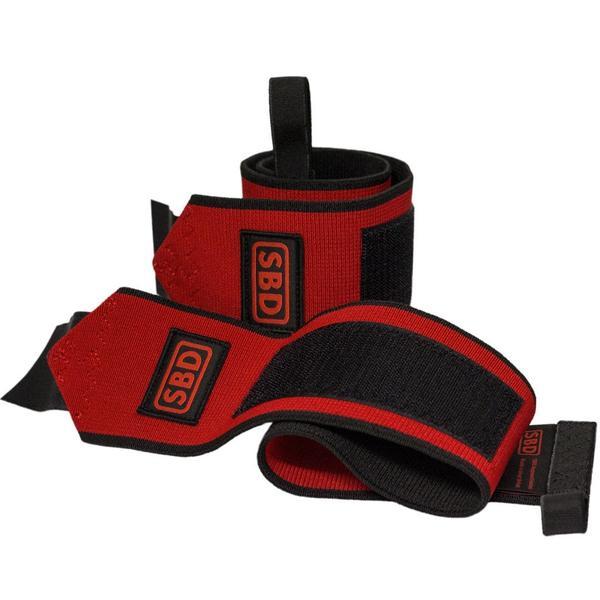
Wrist Wraps
Keep the wrist stacked under the bar on heavy bench and overhead pressing, so the joint doesn’t bend back under load.
Check Out
Lifting Straps
Secure your grip so heavy pulling and deadlift volume isn’t cut short by your hands giving out first.
Check OutLearn the lifts
New to any of the movements in this program? Our lift guides break down technique, cues and the common mistakes to avoid.
 Iron Library