
What is the Israetel hypertrophy mesocycle?
This is a five-week hypertrophy block built on Dr. Mike Israetel’s Renaissance Periodization framework - the volume-landmark model that has become the default vocabulary for how modern lifters talk about training for size.
The premise is that there is no single correct number of sets. There is a minimum that produces growth, a maximum you can recover from, and a productive range in between - and the right way to run a training block is to start near the bottom of that range and climb through it.
How it works
Week one starts at the low end of your productive volume - enough to grow, deliberately not enough to bury you. Each week adds sets, so the stimulus keeps rising as your body adapts to the previous week rather than staying flat and going stale.
Effort is managed with reps in reserve. Early weeks are run a few reps shy of failure, and as the block progresses that margin shrinks until the final hard week is genuinely close to the limit. The fifth week is a deload - volume and effort both drop sharply so accumulated fatigue clears and the growth shows up.
Volume landmarks and RIR
The landmark language - roughly: the least volume that maintains, the least that grows, and the most you can actually recover from - gives you a way to think about set counts per muscle per week instead of guessing. Your own numbers differ by muscle group and shift as you get more advanced.
RIR is the other half. Training every set to failure feels productive and generates fatigue far out of proportion to the growth it buys; keeping a rep or two in the tank for most of the block lets you accumulate far more quality volume. The last week before the deload is where you spend that margin.
Who it’s for
This suits intermediate and advanced lifters chasing size who are comfortable judging effort - you need to be able to estimate reps in reserve with some honesty for the model to work at all.
Beginners are better served by simply adding weight to the bar on a full-body routine; they grow on far less volume than this and do not yet have the calibration to rate RIR. It is also the wrong tool mid meet-prep, when the job is peaking strength rather than accumulating volume.
Strengths & trade-offs
Strengths: a clear, well-reasoned progression model, a built-in deload so fatigue never runs away from you, and a framework you can keep reusing - stack mesocycles back to back and you have a training year.
Trade-offs: RIR estimation is a skill and most people are wrong at first, typically overestimating how close to failure they are. Volume climbs quickly, so honest recovery management matters, and five weeks is a short window to judge results from a single block.
How to run it
Start lower on volume than you think you need. The model depends on having somewhere to climb to; if week one already has you at your ceiling, there is no progression left and you will be beaten up by week three.
Open the spreadsheet below, log your sets and your RIR each session, and take the deload week as written rather than treating it as optional. When the block ends, use what you learned about your own recovery to set the starting volume for the next one.
The spreadsheet
Browse the full program below, or open it in Google Sheets to make your own copy and plug in your numbers.
Spreadsheet via LiftVault. If the preview doesn’t load, use “Open in Google Sheets”.
Equipment
This is a barbell program - you don’t need much, but a few pieces make it run smoothly.
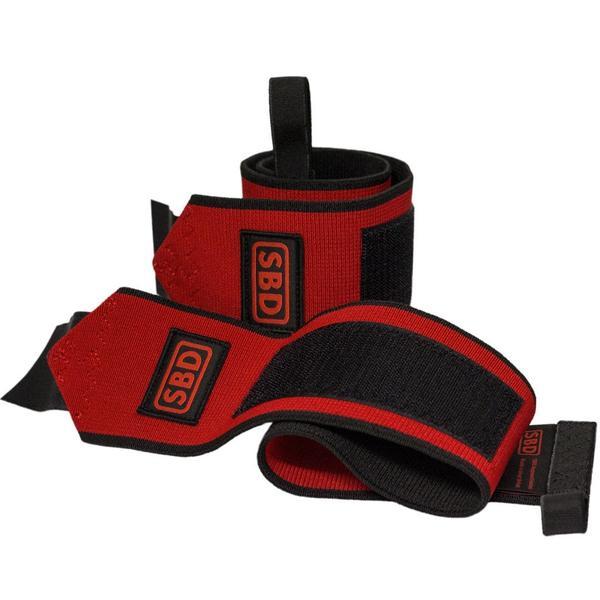
Wrist Wraps
Keep the wrist stacked under the bar on heavy bench and overhead pressing, so the joint doesn’t bend back under load.
Check Out
Lifting Straps
Secure your grip so heavy pulling and deadlift volume isn’t cut short by your hands giving out first.
Check Out
Knee Sleeves
Add warmth and a little support to the knees, plus a small rebound out of the bottom of the squat.
Check OutLearn the lifts
New to any of the movements in this program? Our lift guides break down technique, cues and the common mistakes to avoid.
 Iron Library